Disclaimer. This is not a one size fits all for burnout. There are so many things that can exhaust us. Rather, I’d like to look at something no one told me when I was experiencing severe burn out myself. It wasn’t what I WAS doing, but what I was NOT doing. (And I did a lot more to combat my burnout, which I will talk about to anyone at anytime if you need ideas or support (complimentary, because it feeds my purpose)
The Least Efficient Thing I Ever Did
At the height of my burnout as a management consultant, I did something that made no sense on paper. I added a 4 hour commitment to my day off.
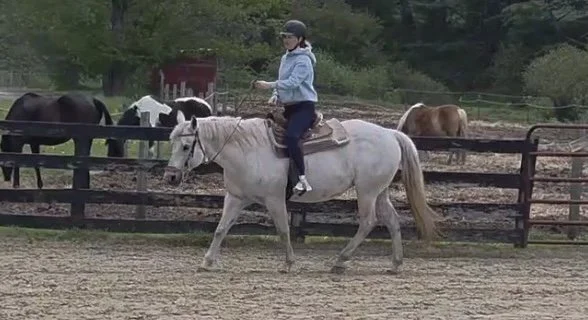
Not a productivity system. Not a wellness app with a streak counter. A volunteer shift at a horse stable for equine therapy. I was 40 years old, I had never really ridden, I am not an equine therapist, and I was busier than I had ever been. So then I added more time by scheduling my own lessons, too.
I am still not good at it. I want to be clear about that up front. But I love it, and it did more for my burnout than any amount of clearing my calendar ever did.
What Burnout Actually Looked Like
If you have worked in consulting, you know the rhythm. Client deliverables, internal initiatives, travel, the steering committee deck that is somehow due before the data exists. I was building a Talent & Culture Transformation practice, which meant I spent my days helping organizations think about how their people were doing, while quietly not doing great myself.
The conventional advice for burnout is subtraction. Work less. Protect your time. Say no more. And some of that is true (boundaries are important!). But it didn’t feel possible at the time. I’m not sure how true that was or if it was the story I had created in my brain. When I tried to fix my exhaustion by carving out empty space, the space filled right back up. An open evening became email. A free Saturday became catching up. Sunday night became project planning.
Did I need to work on boundaries? Yes. Did I realize that there was a time in my career when I was busier but more fulfilled and less stressed? Also yes. (Blog on that TBC).
I needed a different approach.
What I eventually realized is that I did not just need less time working. I needed more time doing something that meant more to me. Burnout is not always a shortage of hours. Sometimes it is a shortage of thoughtful, inspired ones.
A Horse Leaves No Room for Email
Here is the thing nobody tells you about riding: you cannot do it halfway. You cannot mentally draft a client response while posting the trot. You cannot replay a tense meeting while also keeping your heels down, your elbows soft, and your eyes up. The horse will notice. So will your instructor. She’ll tell you to “ride every step” and she’ll be right.
For the first time in years, my lesson became an hour where my brain was fully occupied by one thing. Not distracted, not multitasking, not present in the aspirational, scented-candle sense. Truly absorbed. Psychologists call it flow, that state where challenge and attention line up so completely that time sort of disappears.
While volunteering, I interacted with a 4-year-old who squealed with joy “is that my pony!?” as we walked to the arena. A 7-year-old who gave me a running hug every week and then asked where the barn cat was. A woman with dementia who asked me my birthday every 10 minutes and was thrilled to hear I was a “Christmas baby” every time. A horse who leaned her head into my chest to “hug” me the day I lost my job.
I did not know how much I missed those “in the moment” feelings until I had them again. Consulting had trained me to hold twelve things at once. Riding asked me to hold one, and to hold it well. Volunteering made me see my impact in real time on the people who needed it most.
I wasn’t worried about margin. I was finding meaning.
Being Read by Someone Who Can't Be Spun
Horses are prey animals and also herd animals, which makes them extraordinarily tuned in to the emotional state of whatever is near them. If you arrive tense, they know. If you are anxious and pretending not to be, they really know.
In my professional life, I was very good at “performing” calmness, even when my mind was racing and my heart was pounding. Composed in the client room, upbeat on the team call, fine, really fine. TOTALLY fine. (Right?) A horse does not care about any of that. It responds to what is really happening in your body, not the version you are presenting.
That was humbling at first. Then it became a relief. There is something deeply restorative about being in a relationship where the only thing that works is honesty. When I took a breath and genuinely settled, the horse settled with me. It was a weekly reminder that my nervous system was information, not an inconvenience to be managed around.
And I will admit it: some days the best part was just standing in the barn, brushing a large, warm, patient animal who did not need anything from me except attention, and responded to the true me each moment.
The Gift of Being Bad at Something
Starting something new at 40 comes with its own kind of torture. I mean….exposure. By that point in a career, most of us have arranged our lives around competence. We know what we are good at, and we mostly stay there.
Riding put me squarely back in beginner territory. I bounced. I lost stirrups. I fell! I got corrected on the same thing three weeks running. There were plenty of riders a quarter of my age who made it look effortless. For me… it took a LOT of effort.
And it was wonderful. Being bad at something you love teaches you more than being good at a job you fell into without intention. No one was evaluating my performance against a spreadsheet. There was no promotion cycle at the barn. I was allowed to just learn, slowly and imperfectly, for the joy of it. I was allowed to fail, to literally fall off of a horse and encouraged to get right back on.
I think a lot of high achievers are starving for exactly that permission.
A Few Honest Caveats
I want to be careful not to turn this into "just take up horseback riding." Or even “just spend your weekends volunteering.l Riding is expensive and not accessible to everyone, and I know I was fortunate to be able to make room for it. Volunteering can feel like more work to a body that truly needs rest, or to a parent missing their kids. A hobby is also not a cure for a workplace that is structurally unsustainable. If the job itself is the problem, no amount of time “in the saddle” fixes that, and leaders should not hand people a yoga stipend in place of a reasonable workload. (Please yell that very loudly for the people in the back)
But I do think the underlying idea travels. When I coach leaders through burnout now, I often ask a question that surprises them: not just "what can you take off your plate?" but "what is missing from it?"
Sometimes the answer is rest. Often, though, it is something that brings full attention, a little challenge, some connection, and zero performance reviews. It might be a choir, a pottery class, a pickup basketball game, or a garden, a book club. The first time I went to my doctor for anxiety he said “what do you do that’s not competitive?” And that really stuck with me. The specifics matter less than the quality of the time. Inspired time refills something that pressured time depletes.
Back in the Saddle (Literally, Badly, Happily)
Almost 2 years later, I still ride. I am still not good. My impulse is still loosen by grip from my reigns when I am afraid and don’t know what to do next, which is a metaphor I will leave you to unpack on your own 🤦♀️
My workload and stress level has changed a lot this year as I’ve launched Definitions (some for the better some for the worse). But, more importantly and more intentionally, so has my relationship to my own time. I stopped treating every hour as something to optimize and started protecting a few hours that simply made me feel like myself.
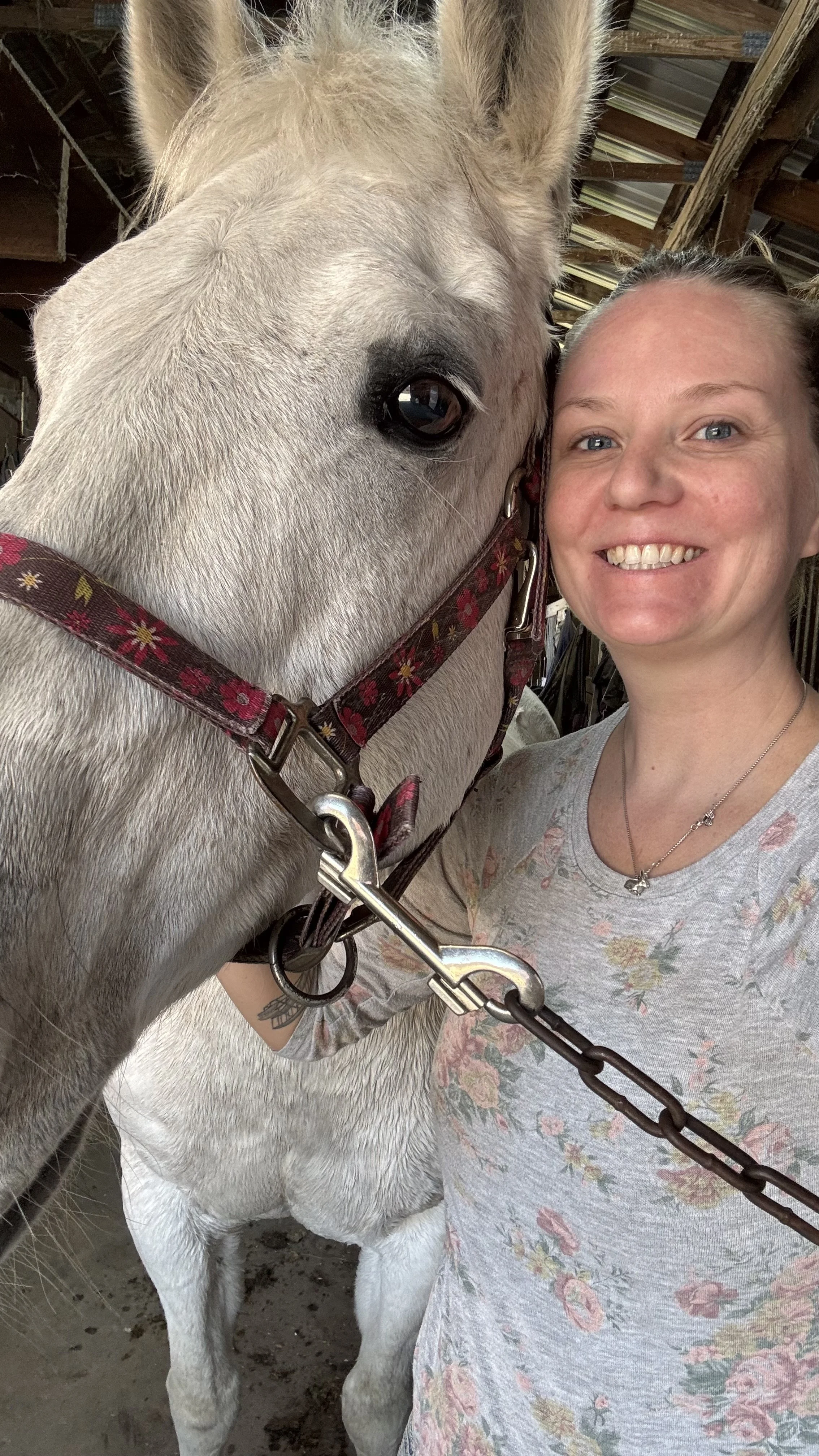
Thank you to Dusty (pictured below) for reintroducing me to purpose and passion, and for being my own equine therapist when I need her.
If you are running on empty and the usual advice to "do less" is not landing, it might be worth asking what you could add instead. And if you would like a thinking partner as you sort that out, I would love to grab a virtual coffee. You can find a time here, let’s chat.